
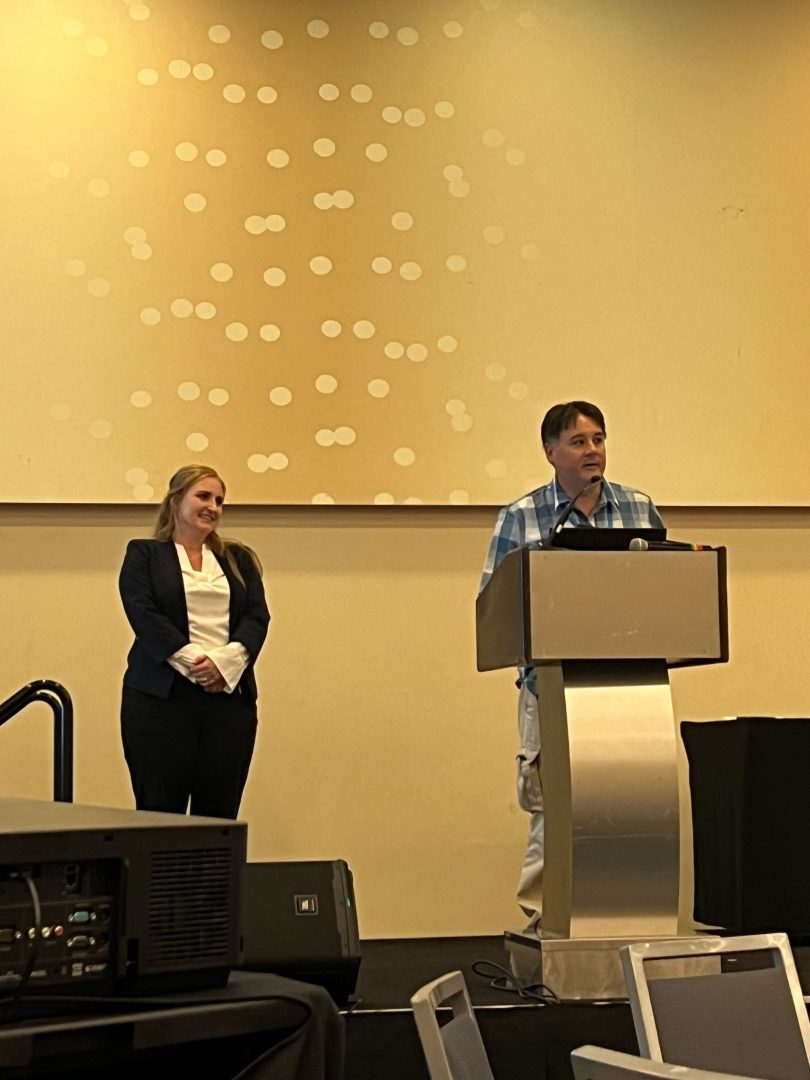
Mike Tobias, MCRUD Program Coordinator, receiving the Cynthia Abrams Award. 

Letter From the Director

Happy Spring! As the season of growth unfolds, it’s fitting that a recent icebreaker centered on words associated with Spring, with someone suggesting “growth” – these last few months have indeed been a period of profound growth and development.

I pen these words energized after an invigorating conference, eager to review the insights gained and reignite my passion for our crucial yet misunderstood work grounded in science for community well-being. Professional development replenishes our reserves in this demanding field, keeping skills current while facilitating invaluable connections to share experiences, learn from others, forge partnerships, and celebrate triumphs.

While virtual trainings provide constant education, I’ve missed the organic conversations between in-person breakouts. To sustain momentum beyond the flight home, we must digest information and determine next steps. Yet how often do we find the luxury to slow down post-conference?

My new(ish) approach to conferencing divides notes into takeaways/next steps, highlights for follow-up, and connections to contact. I set aside time the week following to review and select 1-2 actions for the next month, such as sharing with colleagues, following up with presenters, meeting new contacts, or utilizing new skills/resources. If colleagues also attended, I debrief with them. I challenge you to identify one takeaway and one action step after your conferencing to aid professional growth.

Meanwhile, Prevention Network continues full steam ahead. We just wrapped up National Prevention Week; look forward to hosting a bowling fundraiser (6/23); and are planning the MIHEN conference (6/13), Inaugural Prevention Coalitions Conference (7/25), and PAM conference (11/8); and cannot wait to unveil new resources in the coming months. We’re also so proud of Mike Tobias’s Cynthia Abrams Award from the US Alcohol Policy Alliance. See our full newsletter for more on what we are up to!
We’re excited to share the latest updates on the Michigan Project to Prevent Prescription Drug/Opioid Overdose-Related Deaths (MI-PDO) grant initiative, focusing on reducing opioid-related deaths and adverse events in Calhoun, Genesee, and Wayne counties.


We’ve been working closely with the Michigan Department of Health and Human Services (MDHHS) during Year 3 of the grant. With significant support from MDHHS and WSU, we’ve made remarkable progress. Recently, we completed in-person site visits for all eight subrecipients, showcasing the exceptional work being done in Wayne, Genesee, and Calhoun counties.


Our key goals include enhancing community capacity, implementing safe prescribing practices, and increasing naloxone education and distribution. Subrecipients are actively tracking naloxone distribution data and have set an annual goal of distributing 500 kits as part of the statewide plan.


Throughout the grant period, subrecipients have been developing implementation steps around ten project areas aligned with the SAMHSA Opioid Overdose Prevention Toolkit. We’re grateful for the advisory council’s guidance, which has been instrumental in shaping our efforts.

As a program coordinator, Ieshia provides technical assistance to ensure subrecipients meet grant requirements and stay on track. The PDO grant has been pivotal in benefiting our communities by supporting education, healthcare, and economic development. Thanks to the dedicated efforts of our partners and subrecipients, the PDO grant continues to make a positive impact.


For more updates, be sure to check out the PDO monthly newsletter!

This section highlights upcoming events such as webinars, conferences, and workshops, providing you with valuable opportunities to engage with experts, learn new strategies, and network with peers, ultimately fostering collaboration and advancing knowledge in the prevention field. Check out events coming up in the next 3 months below:

See the full calendar of events here.

  • MCRUD Alcohol Policy Issues Meeting — June 10th, 2024 — Every month on the second Monday at 10 AM, people across Michigan meet to discuss alcohol policy and local changes that impact the access and availability with the goal of preventing substance misuse and reducing the negative impacts on public health.
  • 2024 MIHEN Conference — June 13th, 2024 — This year’s MIHEN Conference is focused on internal and external partnerships within college campuses. Looking at recovery, prevention, and treatment in higher education through a partnership lens allows professionals to better support students and meet the needs of those who are underrepresented. Click here to register!
  • Pins for Prevention — June 23rd, 2024 — Join us for a fun-filled evening of bowling, pizza, and soft drinks for just a $25 entry fee! Enjoy great company and exciting activities, including a silent auction with fantastic items up for grabs. Click here to get your tickets!
  • F.F.U.N (Fourth Friday Unwind & Network) Coalition Support Group – June 28th, 2024 – Open to anyone who is part of or interested in becoming part of a community-based coalition addressing substance misuse prevention. Special invitation to current coalition coordinators. We will use this time to address common challenges and share tools both old and new. Feel free to enjoy your own lunch during this relaxed group. Join us here!
  • MCRUD General Meeting — July 23rd, 2024 — Join Michigan Coalition to Reduce Underage Drinking general membership quarterly meeting to share updates from across the state about factors impacting our shared efforts to prevent underage alcohol use.
  • 2024 Michigan SUD Prevention Coalitions Conference — July 25th, 2024 — Get ready for dynamic speakers, interactive exhibitors, and the opportunity to connect with others across the state of Michigan and beyond. The theme for 2024 is R.I.C.H – Respect. Inform. Connect. Hope. We expect this conference to encourage and inspire professionals who are passionate about preventing substance misuse disorders in Michigan. Join us, we can’t wait to see you there! Click here to register!
  • F.F.U.N (Fourth Friday Unwind & Network) Coalition Support Group – July 26th, 2024 – Open to anyone who is part of or interested in becoming part of a community-based coalition addressing substance misuse prevention. Special invitation to current coalition coordinators. We will use this time to address common challenges and share tools both old and new. Feel free to enjoy your own lunch during this relaxed group. Join us here!
  • 2024 National Meeting (for those working in higher education) — July 30th, 2024 – August 1st, 2024— The conference experience offers a blend of educational opportunities, networking, and collaborative experiences for which the conference is known. It is an ideal conference for those working within the alcohol and drug continuum with college students, including both prevention and recovery. Visit the conference web page to learn more: https://hecaod.osu.edu/national-meeting/

If you haven’t already check out the following featured resources! To see a list of all new resources added to the resource library, see this link.

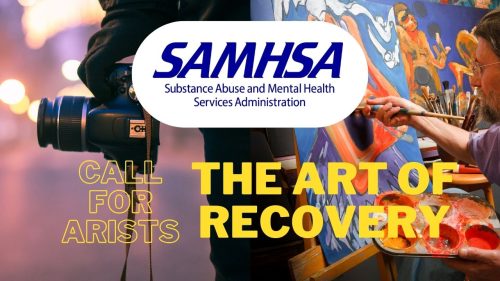
SAMHSA Announces Art of Recovery Project


Submissions are open May 7 to June 28 for the Art of Recovery Project with categories for youth 13-17 and adults 18+. Artists may submit in two categories: painting, drawing, or mixed media, and photography. Selected entries will be posted on SAMHSA’s website as part of an online exhibit, Gallery of Hope: Artistic Expression of Recovery Across the Nation. The online gallery will launch in September and run throughout the month to celebrate National Recovery Month.


Click here for more information.

June is LGBTQIA+ Pride month! To celebrate and recognize those folks, the New England PTTC is hosting a virtual webinar titled “Health Disparities Encountered in LGBTQ+ Communities of Color: From Theory to Practice.”


This event will delve into the unique health challenges faced by individuals who belong to both sexual and gender minorities and racial and ethnic minorities—groups that the NIH has identified as experiencing significant health disparities. The presentation will explore how an intersectionality framework and minority stress theory can enhance our understanding of these complex dynamics. Attendees will gain practical insights into addressing these disparities in behavioral health care, fostering better health outcomes for these often-overlooked communities.


Click here for more information.

The Prevention Network newsletter delivers timely and comprehensive state and national updates, covering the latest news, research findings, and best practices in the prevention field, ensuring you stay well-informed and equipped to address emerging challenges and opportunities in your prevention efforts. Check out some national and state updates below:

Governor Signs Proclamation Declaring May as Asian American and Pacific Islander Heritage Month

Governor Gretchen Whitmer has proclaimed May as Asian American and Pacific Islander (AAPI) Heritage Month in Michigan, celebrating the diverse and vibrant AAPI communities across the state. Highlighting Michigan as a place of opportunity and inclusivity, Whitmer and state leaders, including Senators Sam Singh and Stephanie Chang, and Representatives Ranjeev Puri and Mai Xiong, emphasized the significant contributions of AAPI individuals to the state’s cultural, economic, and social fabric. AAPI Heritage Month honors the rich history and achievements of Asian Americans, Native Hawaiians, and Pacific Islanders, including milestones like the arrival of the first Japanese immigrants in 1843 and the completion of the transcontinental railroad in 1869. With approximately 377,181 Asian Americans making up 3.7% of Michigan’s population, this month serves as a vital recognition of their ongoing impact and legacy.

Click here to read the full article. 

Updates with 2022 Data Have Been Made to the MI-SUVI

(MDHHS) has introduced the Michigan Substance Use Vulnerability Index (MI-SUVI), a new tool designed to help communities address substance use issues more effectively. Unlike traditional methods that relied solely on overdose mortality data, MI-SUVI incorporates a broader range of factors, including access to services, social vulnerability, and substance use burden, to generate a comprehensive county-level vulnerability score. This innovative index aims to facilitate data-driven, community-focused substance use disorder programming, particularly as Michigan distributes $800 million from a national opioid settlement over 18 years. The tool provides detailed county scorecards and will soon include sub-county data to further refine resource allocation. Highlighted by Dr. Natasha Bagdasarian and supported by local health leaders, MI-SUVI identifies Michigan’s most vulnerable counties, such as Oscoda, Wayne, Clare, Schoolcraft, and Oceana, enabling targeted interventions and enhanced support for those at greater risk of adverse substance use outcomes.

Click here to access this resource. 

Biden-Harris Administration Releases National Strategy for Suicide Prevention and First-Ever Federal Action Plan

The Biden-Harris Administration, through the U.S. Department of Health and Human Services, has released the 2024 National Strategy for Suicide Prevention and its Federal Action Plan. Developed with input from over 20 federal agencies, the strategy offers a comprehensive, society-wide approach to address the urgent public health crisis of suicide, which claimed over 49,000 lives in the U.S. in 2022. It includes 200 specific actions aimed at improving prevention, intervention, and recovery services, with a focus on integrating suicide prevention into various community systems and prioritizing equity for disproportionately affected populations. This coordinated effort emphasizes the importance of partnerships and lived experience in creating effective, data-driven strategies to reduce suicide rates nationwide.

Click here to read the full article. 

Understanding the Relationship Between Social Determinants of Health and Health Disparities 

Understanding the relationship between social determinants of health and health disparities is crucial for prevention professionals tackling substance misuse. Social determinants significantly impact individuals’ vulnerability to substance use disorders and their access to effective treatment and prevention services. To equip prevention professionals with the knowledge and tools to address these complex factors, SAMHSA offers two self-guided courses: “What are Behavioral Health Disparities?” and “Incorporating the Social Determinants of Health into Substance Use Prevention.” These courses provide comprehensive insights into how systemic inequities contribute to behavioral health disparities and offer practical strategies for integrating social determinants into prevention efforts. By understanding and addressing these foundational elements, professionals can create more effective, equitable prevention programs that better serve all communities.

What Are Behavioral Health Disparities? 

Incorporating the Social Determinants of Health into Substance Use Prevention

The following are legislative updates that have occurred at the federal and state level related to substance use:

  • MI SB 730 Liquor: retail sales; displaying co-branded alcoholic beverages adjacent to certain products; prohibit. Amends 1998 PA 58 (MCL 436.1101 – 436.2303) by adding sec. 609k. 
    • Last action: Feb 28, 2024, Senate: REFERRED TO COMMITTEE ON REGULATORY AFFAIRS
  • US S 4226 A bill to decriminalize and deschedule cannabis, to provide for reinvestment in certain persons adversely impacted by the War on Drugs, to provide for expungement of certain cannabis offenses, and for other purposes. 
    • Last action: May 01, 2024, Senate: Read twice and referred to the Committee on Finance.
  • MI SB 807 Marihuana: other; individuals who are 19 years of age or older; allow to be employed by or volunteer for marihuana establishments. Amends title & secs. 4, 5, 10 & 11 of 2018 IL 1 (MCL 333.27954 et seq.). 
    •  Last action: Apr 09, 2024, Senate: REFERRED TO COMMITTEE ON REGULATORY AFFAIRS
  • MI SB 57 and MI SB 58 Controlled substances: drug paraphernalia; sale of nitrous oxide devices; prohibit. Amends sec. 7453 of 1978 PA 368 (MCL 333.7453). TIE BAR WITH: SB 0058’23 
    • Last action: Mar 12, 2024, Senate: ASSIGNED PA 0019’24 WITH IMMEDIATE EFFECT

Thank you for reviewing Prevention Network’s newsletter! If you have any feedback regarding this newsletter or ideas for our next newsletter, please email us at info@preventionnetwork.org. Lastly, a special thanks to Prevention Network’s Board of Trustees for supporting our mission, vision, and goals.